//
News
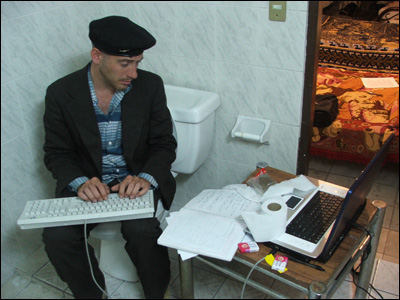
SALTILLO, MEXICO -- Author’s Note: It’s two o’clock in morning; I’m writing from the Free Press Mexico remote office (i.e. the motel bathroom). Although this is a day of strong historical import, many days in the field (i.e. too many beers) may result in somewhat off-kilter coverage, and for that I am, as always, very sorry.
After a frustrating day of coping with my logistics team’s emotions, I was searching for cervescas on Saltillo’s Plaza Centro. I was storming down the sidewalk elbowing Mexicans and snarling gibberish to myself when I turned into what I thought was a bar and looked down the barrel of twenty Mexicans wearing black bandito-style masks, who stared at me as I stood in the doorway, looking around. I walked back outside, noticed the large red star stenciled next to the door. I rushed back inside the Saltillo chapter of the EZLN.
"Ustedes Zapatistas?" I asked. They all looked at each other’s masks and then at the various posters depicting Subcommandante Marcos, then back at me, back at each other, and then nodded.
"I am an American journalist. I like Zapatistas. I have come for you!" They glanced around in alarm, some shifting in their chairs.
"I need a beer. Donde estas un barre?"
They all pointed frantically down the street, so I gathered my logistics team and my photographer and headed in the direction they had indicated. We found the bar, a crusty joint with bright fluorescent lights that did little to illuminate the dark corners, and sat in one. I ordered a forty of Victoria to celebrate my journalistic triumph. After days of drunkenness and despondency, I had found a story.
We drank another round.
And another.
We had another beer.
The waitress saw me reeling in my chair and brought me soup. I ate the soup and smoked a cigarette.
We had another beer.
I realized we had been away from the story for nearly two hours. Sometimes stories die, or escape, or are hard to find again while drunk, so I rounded up the crew from under the table and we assessed the situation. We had half a pack of Dunhills left and two cameras; surely these would be sufficient. I grabbed some cocktail napkins on which to scribble notes and we staggered off down the street towards the office.
Some of the Zapatistas were large, several small. Some of the Zapatistas were attractive females. Nearly all of them were college students; one was a college teacher and one was a big fuckin’ Mexican with a head as hairless as mine but much larger. He seemed to be their leader. I explained our mission to them, as well as I could in badly broken Spanish. They were all very pleased (relieved?) when they finally understood that we were nothing worse than journalists.
"Periodistas, eh? No FBI? No CIA?" The big one, David Muno, asked with some uncertainty. I reassured them by smelling of alcohol and not speaking spanish. Allowing us to take video and stills, they were very agreeable to answering questions while they readied themselves for the protest.
We took taxis, courtesy the EZLN, to a local high school and waited. When we arrived, there were perhaps twenty or thirty students lazing around the courtyard, but before we left the crowd had become at least five hundred strong. The Zapatista jefe in charge, grande David Muno, introduced us and our purpose with a bullhorn to roaring applause as he stood in front of a large banner sporting the airbrushed likeness of Che Guevara. It was difficult to accept the praise, as I was nearly too drunk to walk, so I shook my head and mumbled, "lo siento, lo siento" until the noise died down.
Muno called everyone to attention or whatever, and the march began. I tried to stay in the middle of the throng but I was carrying my laptop, an archaic machine with an external keyboard which brought the total weight of my burden to nearly fifteen pounds, so I staggered along as best I could, trying to pick up the chants. We marched through the entire city. The entire fucking city. Armed policia lined the streets and glared at us as we sang nasty songs to them. Listening for the metallic clink of tear gas grenades, I persuaded someone to let me help carry a banner, but the whole crowd would occasionally break into a sprint and two small Zapatistas are not enough to pull me along. My frail alcoholic legs seemed to be ready to give out just as everyone sat down in an intersection, blocking traffic in every direction. We did this repeatedly, spoiling a nice walk to the point that when they started to run I started to scream curses at them. As we were walking up one of the busiest streets in town I couldn’t understand why we weren’t being viciously clobbered by the police. I didn’t understand until later that the last thing the federal government wanted was another massacre; the police clearly had strict orders not to shut down the protest. We paused under an overpass and blocked the city’s main thoroughfare for several minutes until someone shot off a gun or firecracker, at which point everyone but me ran graceful as gazelles down the street. My bladder was about to burst, so I ducked into a 7-Eleven and spent several minutes pinching off and trying to ask the clerk for the bathroom key. Denied, I ran back outside and realized the protest had left me far behind.
I screamed, "Soy periodista! Donde estas la protesta?" at a cop, who gesticulated in disgust. Tucking my massive laptop under my arm, I sprinted through the street, in front of honking cars and screaming autobus drivers, elbowing mean-spirited Mexicans until I caught up with the parade. Sweating beer, I caught up with my photo crew and we marched to the Zocalo, or town square, where a large stage had been set up with a sound system and concert speakers. Muno got everyone all riled up by screaming something not even remotely in English and the stage was taken over by punk rockers, also wearing masks, and the plaza came alive with rock music and absolutely no one in the crowd dancing at all.
I peed inconspicuously in a large fountain, the release wringing screams of relief from my chapped lips. I sat down with some kids and asked them questions they didn’t understand, receiving similar answers. Crawling to a small, dark corner of the Zocalo, my borracha overcame me and I passed out to the rousing militance of the punk rock and the pounding of no feet whatsoever on the brick-paved square, and dreamt of Kent State, 1968, and all the students who have bravely died at the hands of the governments their parents have created. Spiked haired Mexican punkers look just like hippies when they are killed by government lead, but never in my public school education had I been told of the Tlatelolco massacre. But mexico is, after all, a third world country with no relevance to us civilized folk.
Later, back at my motel, I spoke briefly with Hernando Garcia, proprietor. In 1968 he was fifteen years old, nearly as old as many of the masked Zapatista youth with whom I had marched earlier that day.
"It’s always the same problem, in Mexico. Ninety percent of the wealth is held by just a few, while the people have no opportunities for change, for social care, no opportunity for a voice. In that moment, the students spoke up, and the federal government moved quickly, silenced them immediately. Now it is better; the lefter peoples can speak, can be heard, the students can say what they want. In this moment, it is better. But there is a long way to go. For Mexico, it is a long way to go."
"These violent delights shall bear violent ends."
-William Shakespeare
After a frustrating day of coping with my logistics team’s emotions, I was searching for cervescas on Saltillo’s Plaza Centro. I was storming down the sidewalk elbowing Mexicans and snarling gibberish to myself when I turned into what I thought was a bar and looked down the barrel of twenty Mexicans wearing black bandito-style masks, who stared at me as I stood in the doorway, looking around. I walked back outside, noticed the large red star stenciled next to the door. I rushed back inside the Saltillo chapter of the EZLN.
"Ustedes Zapatistas?" I asked. They all looked at each other’s masks and then at the various posters depicting Subcommandante Marcos, then back at me, back at each other, and then nodded.
"I am an American journalist. I like Zapatistas. I have come for you!" They glanced around in alarm, some shifting in their chairs.
"I need a beer. Donde estas un barre?"
They all pointed frantically down the street, so I gathered my logistics team and my photographer and headed in the direction they had indicated. We found the bar, a crusty joint with bright fluorescent lights that did little to illuminate the dark corners, and sat in one. I ordered a forty of Victoria to celebrate my journalistic triumph. After days of drunkenness and despondency, I had found a story.
We drank another round.
And another.
We had another beer.
The waitress saw me reeling in my chair and brought me soup. I ate the soup and smoked a cigarette.
We had another beer.
I realized we had been away from the story for nearly two hours. Sometimes stories die, or escape, or are hard to find again while drunk, so I rounded up the crew from under the table and we assessed the situation. We had half a pack of Dunhills left and two cameras; surely these would be sufficient. I grabbed some cocktail napkins on which to scribble notes and we staggered off down the street towards the office.
Some of the Zapatistas were large, several small. Some of the Zapatistas were attractive females. Nearly all of them were college students; one was a college teacher and one was a big fuckin’ Mexican with a head as hairless as mine but much larger. He seemed to be their leader. I explained our mission to them, as well as I could in badly broken Spanish. They were all very pleased (relieved?) when they finally understood that we were nothing worse than journalists.
"Periodistas, eh? No FBI? No CIA?" The big one, David Muno, asked with some uncertainty. I reassured them by smelling of alcohol and not speaking spanish. Allowing us to take video and stills, they were very agreeable to answering questions while they readied themselves for the protest.
-
Zapatista protest?
Can I come?
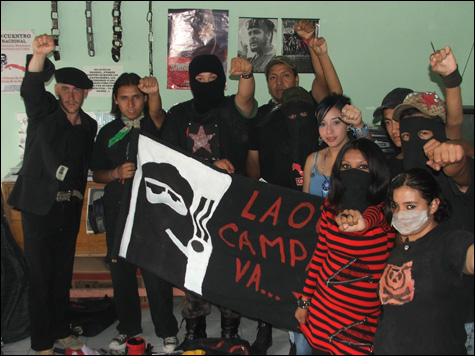
We took taxis, courtesy the EZLN, to a local high school and waited. When we arrived, there were perhaps twenty or thirty students lazing around the courtyard, but before we left the crowd had become at least five hundred strong. The Zapatista jefe in charge, grande David Muno, introduced us and our purpose with a bullhorn to roaring applause as he stood in front of a large banner sporting the airbrushed likeness of Che Guevara. It was difficult to accept the praise, as I was nearly too drunk to walk, so I shook my head and mumbled, "lo siento, lo siento" until the noise died down.
Muno called everyone to attention or whatever, and the march began. I tried to stay in the middle of the throng but I was carrying my laptop, an archaic machine with an external keyboard which brought the total weight of my burden to nearly fifteen pounds, so I staggered along as best I could, trying to pick up the chants. We marched through the entire city. The entire fucking city. Armed policia lined the streets and glared at us as we sang nasty songs to them. Listening for the metallic clink of tear gas grenades, I persuaded someone to let me help carry a banner, but the whole crowd would occasionally break into a sprint and two small Zapatistas are not enough to pull me along. My frail alcoholic legs seemed to be ready to give out just as everyone sat down in an intersection, blocking traffic in every direction. We did this repeatedly, spoiling a nice walk to the point that when they started to run I started to scream curses at them. As we were walking up one of the busiest streets in town I couldn’t understand why we weren’t being viciously clobbered by the police. I didn’t understand until later that the last thing the federal government wanted was another massacre; the police clearly had strict orders not to shut down the protest. We paused under an overpass and blocked the city’s main thoroughfare for several minutes until someone shot off a gun or firecracker, at which point everyone but me ran graceful as gazelles down the street. My bladder was about to burst, so I ducked into a 7-Eleven and spent several minutes pinching off and trying to ask the clerk for the bathroom key. Denied, I ran back outside and realized the protest had left me far behind.
I screamed, "Soy periodista! Donde estas la protesta?" at a cop, who gesticulated in disgust. Tucking my massive laptop under my arm, I sprinted through the street, in front of honking cars and screaming autobus drivers, elbowing mean-spirited Mexicans until I caught up with the parade. Sweating beer, I caught up with my photo crew and we marched to the Zocalo, or town square, where a large stage had been set up with a sound system and concert speakers. Muno got everyone all riled up by screaming something not even remotely in English and the stage was taken over by punk rockers, also wearing masks, and the plaza came alive with rock music and absolutely no one in the crowd dancing at all.
I peed inconspicuously in a large fountain, the release wringing screams of relief from my chapped lips. I sat down with some kids and asked them questions they didn’t understand, receiving similar answers. Crawling to a small, dark corner of the Zocalo, my borracha overcame me and I passed out to the rousing militance of the punk rock and the pounding of no feet whatsoever on the brick-paved square, and dreamt of Kent State, 1968, and all the students who have bravely died at the hands of the governments their parents have created. Spiked haired Mexican punkers look just like hippies when they are killed by government lead, but never in my public school education had I been told of the Tlatelolco massacre. But mexico is, after all, a third world country with no relevance to us civilized folk.
Later, back at my motel, I spoke briefly with Hernando Garcia, proprietor. In 1968 he was fifteen years old, nearly as old as many of the masked Zapatista youth with whom I had marched earlier that day.
"It’s always the same problem, in Mexico. Ninety percent of the wealth is held by just a few, while the people have no opportunities for change, for social care, no opportunity for a voice. In that moment, the students spoke up, and the federal government moved quickly, silenced them immediately. Now it is better; the lefter peoples can speak, can be heard, the students can say what they want. In this moment, it is better. But there is a long way to go. For Mexico, it is a long way to go."
"These violent delights shall bear violent ends."
-William Shakespeare