I’ve learned: “The secret of a top-notch con man is being able to know what the MARK WANTS’, and how to make that person (VOTERS) think he’s getting it.”- Unknown
How Power Learns to Control Without You Noticing — And Why That Should Worry You
Part 1 explained what is happening to our elections and voter databases.
Part 2 explains how power is now exercised — quietly, legally, and largely invisibly.
Most Americans still imagine control as something obvious: soldiers in the streets, ballots being stuffed, or loud authoritarian decrees.
That’s no longer how modern systems work.
Today, power operates through data, algorithms, and narrative shaping — not force.
And the most dangerous part is this:
Most people don’t realize it’s happening.
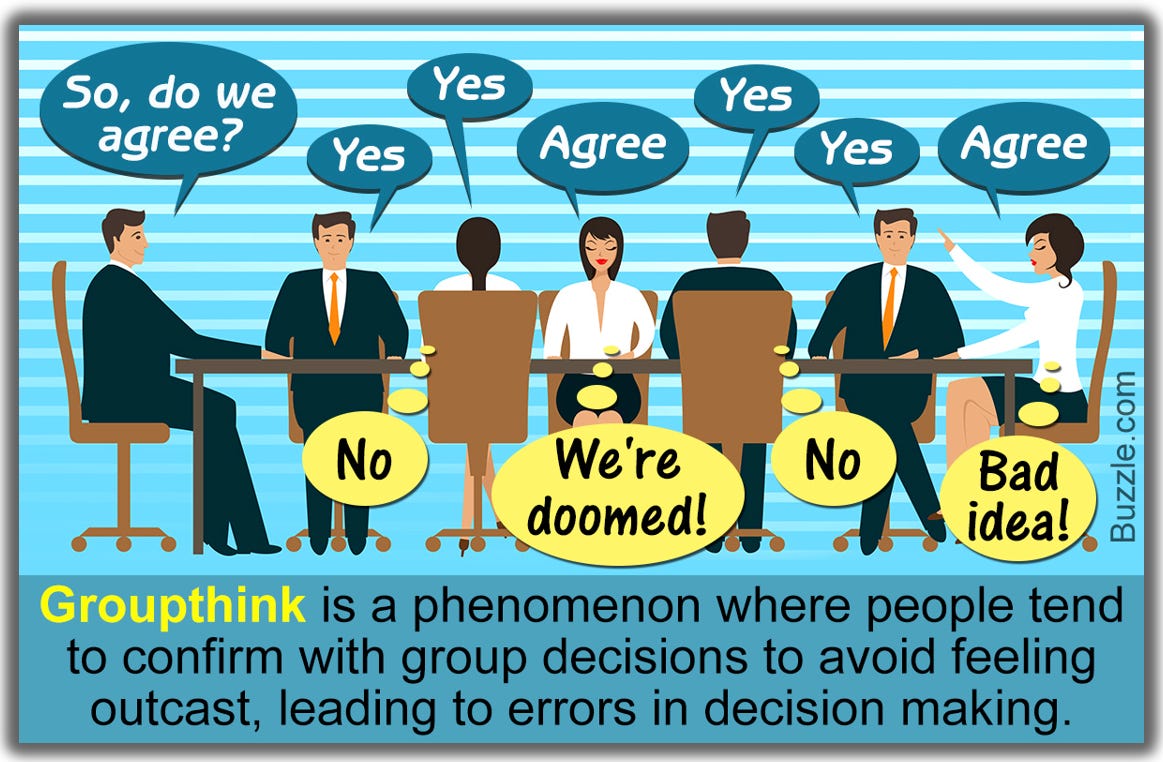
Why Groupthink Works So Well
Ants and bees communicate through signals. No single ant understands the whole system — it simply follows cues.
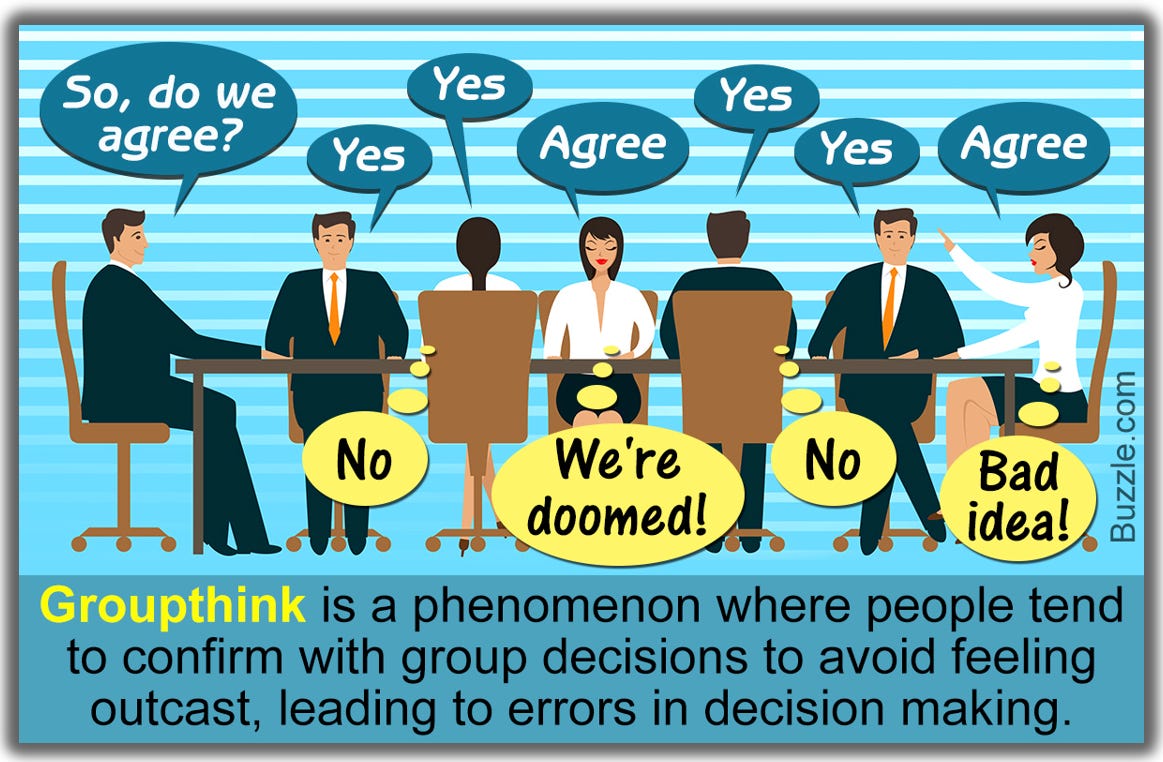
Humans are different.
We can pause.
We can question.
We can reflect.
But modern systems are designed to short-circuit that ability.
Algorithms reward emotional reaction over careful thought.
Outrage spreads faster than facts.
Fear keeps people engaged.
Confusion keeps people compliant.
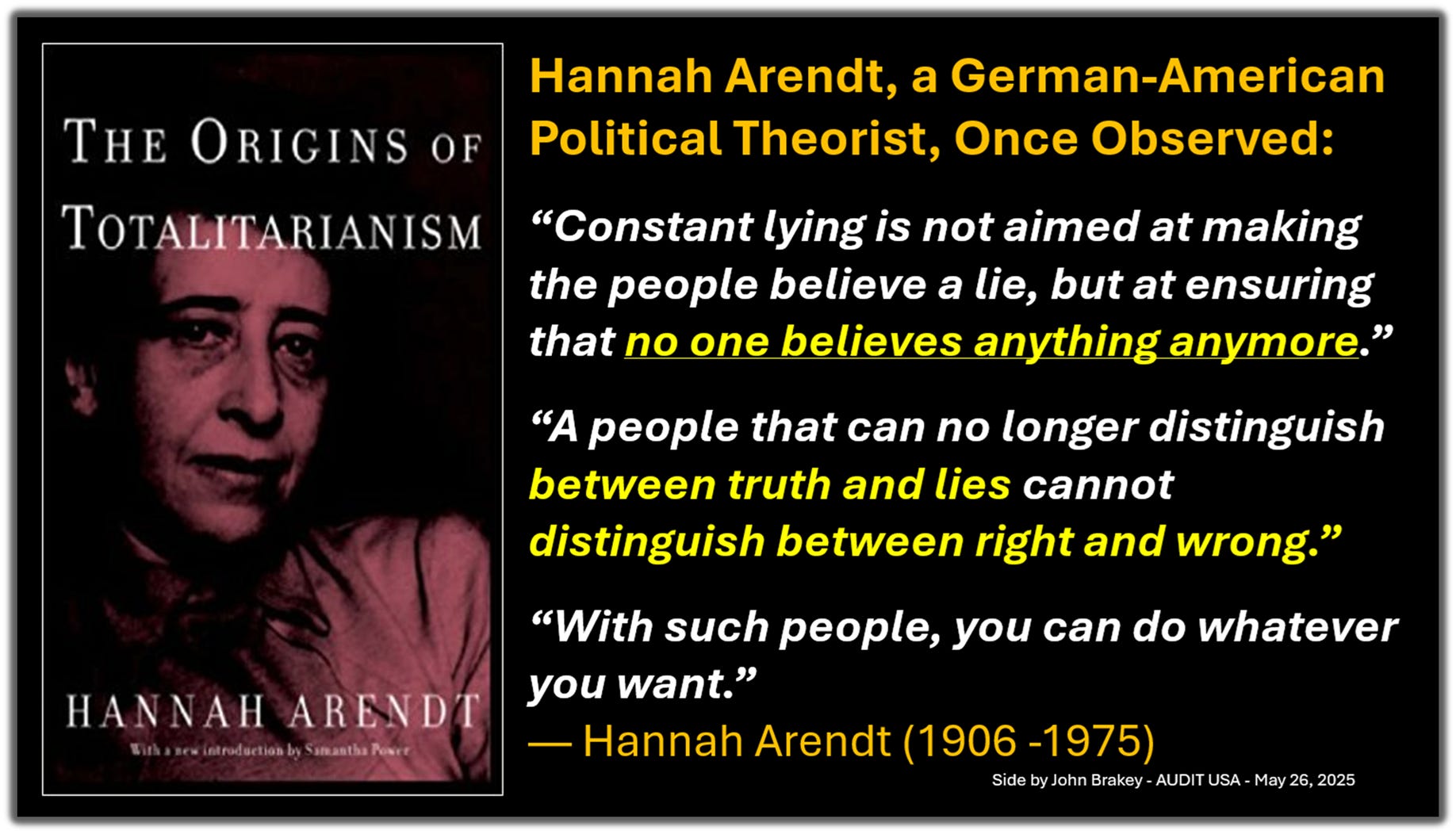
Over time, people don’t need to be convinced of anything specific.
They only need to be exhausted, divided, and unsure what’s real.
That’s not accidental.
Why Peter Thiel Matters
Peter Thiel is not just a billionaire investor.
He is an architect of a political philosophy that openly questions whether democracy and freedom are compatible.
His influence is not theoretical.
Peter Thiel Doesn’t Want You to See This Clip
This theory—supported by Occam’s Razor—suggests democracy’s decline is no accident.
It is being intentionally engineered by elites like billionaire tech mogul Peter Thiel, whose investments and AI influence are now embedded deep within our government.
Does Peter Thiel own VP J.D. Vance?
It’s a bit more nuanced than “ownership,” but Peter Thiel has certainly played a significant role in J.D. Vance’s political rise.
Here’s the key context:
Peter Thiel, the billionaire tech entrepreneur and co-founder of PayPal and Palantir, was a major financial backer of J.D. Vance’s 2022 U.S. Senate campaign in Ohio.
Thiel contributed $15 million to a super PAC supporting Vance—an unusually large amount for a Senate race. That backing helped Vance win the Republican primary, where he was initially trailing.
Vance and Thiel are also personally close. Vance worked at Thiel’s venture capital firm, Mithril Capital, and they share similar populist-nationalist political views. Vance, like Thiel, has criticized globalization, Big Tech overreach, and what they see as cultural decay.
Vance’s shift from Never Trump (back in 2016) to a pro-Trump stance also aligned with Thiel’s political evolution and the MAGA movement.
So, does Thiel “own” Vance? Not in the literal sense—but Vance is certainly seen as a Thiel-aligned politician who owes part of his political success to Thiel’s support.
Video starts at 15 Minutes on politic power of Thiel and JD Vance:
Political figures do not need to be villains for this to be dangerous. Even intelligent, well-spoken leaders — including J.D. Vance — operate inside ecosystems shaped by powerful technology financiers and platforms.
The issue is not personality. It is structure.
Once systems are built to centralize control, intent no longer matters.
They will be used — by this administration or the next.
I’ve learned: “The secret of a top-notch con man is being able to know what the MARK WANTS’, and how to make that person (VOTERS) think he’s getting it.”- Unknown

We’re Smarter Than Ants — But We Forget to Think
Humans are different — or at least we used to be.
Modern digital systems are engineered to bypass reflection and reward reaction.
That is how consent erodes quietly.
The Peter Thiel–J.D. Vance Axis of Influence
Peter Thiel is not just a billionaire investor; he is an architect of a political philosophy that openly questions whether democracy and freedom are compatible.
His influence is not theoretical. It is embedded in institutions, platforms, and political ecosystems.
It would be inaccurate to say Thiel “owns” J.D. Vance. The relationship is more nuanced. Thiel played a significant role in Vance’s political rise through substantial financial backing and long-standing ideological alignment. That support helped elevate Vance from relative obscurity into national office.
The concern here is not personality. It is structure.
Once systems are built to centralize power—whether in data, governance, or political financing—individual intent becomes secondary. Those systems persist. They are inherited. And they will be used, by this administration or the next.
That is how power endures in modern politics.
Why Elections Are the First Target
Elections are:
Predictable
Rule-bound
Data-rich
Emotionally charged
That makes them ideal targets for systems seeking control through information management rather than persuasion.
When voter rolls are centralized, data is aggregated, and decisions are made inside opaque processes, something subtle but dangerous happens:
Citizens lose the ability to independently verify reality.
They are told to trust systems they cannot see, audit, or understand.
That is how democratic control slips away — quietly.
Verification Is the Antidote
This is why Auditable Ballot Examination (ABE) matters.
ABE does not tell people what to think.
It does not centralize power.
It allows citizens to see for themselves — to verify outcomes using evidence instead of narratives.
In an age of manipulation, verification is freedom.
Truth is not a weapon.
It is therapy.
And one lesson matters more than any other:
Better to understand than to be managed.
Better to ask questions than to become a mark.
Better to verify than to obey.
Nothing is truly fixed until we understand why it broke.
This Is a Civic Emergency
This is no longer just an economic issue.
It is a civic emergency.
Democracy cannot survive when a handful of corporations wield more influence than entire governments — shaping public opinion, political behavior, and even electoral outcomes.
This system has a name:
Technofeudalism.
In earlier eras, power came from owning land.
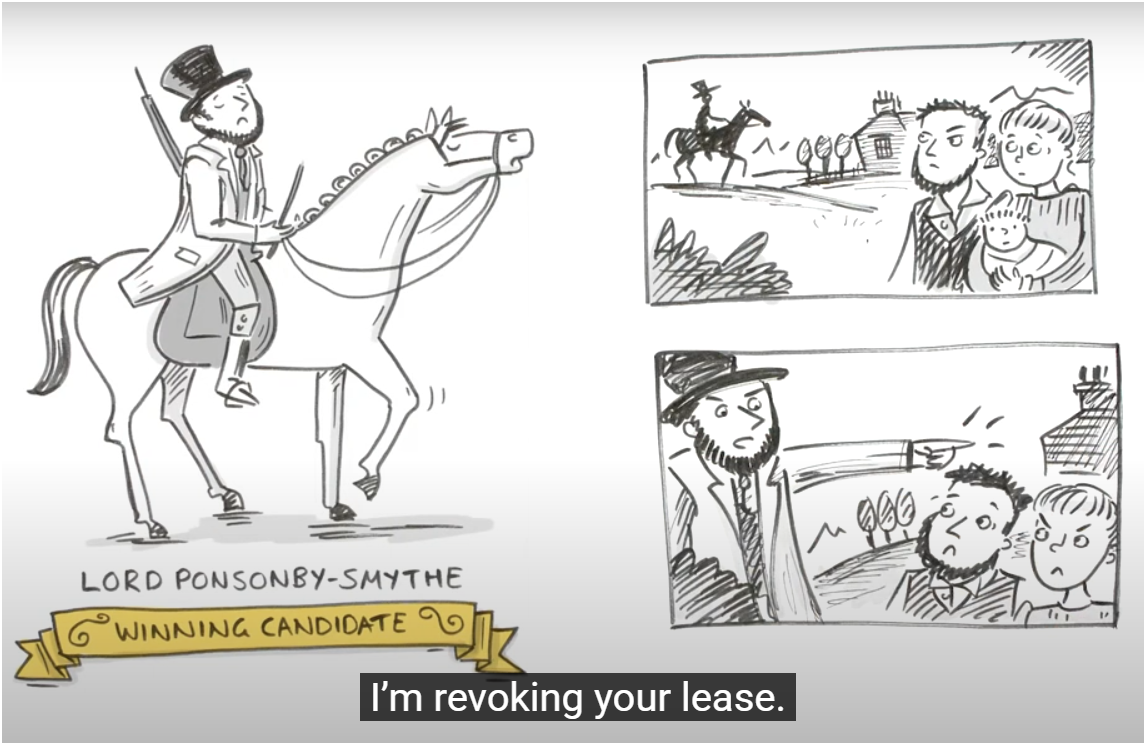
Today, it comes from owning platforms, data, and attention.
Users unknowingly pay “digital rent” with their data.
Algorithms decide what rises, what disappears, and what provokes outrage — because outrage drives engagement.
Confusion isn’t a failure of the system.
It’s a feature.
How America Got the Secret Ballot
To understand ABE and modern transparency, we must understand where secrecy came from.
Secrecy and privacy are not the same thing.
People confuse them today — but historically, the distinction mattered.
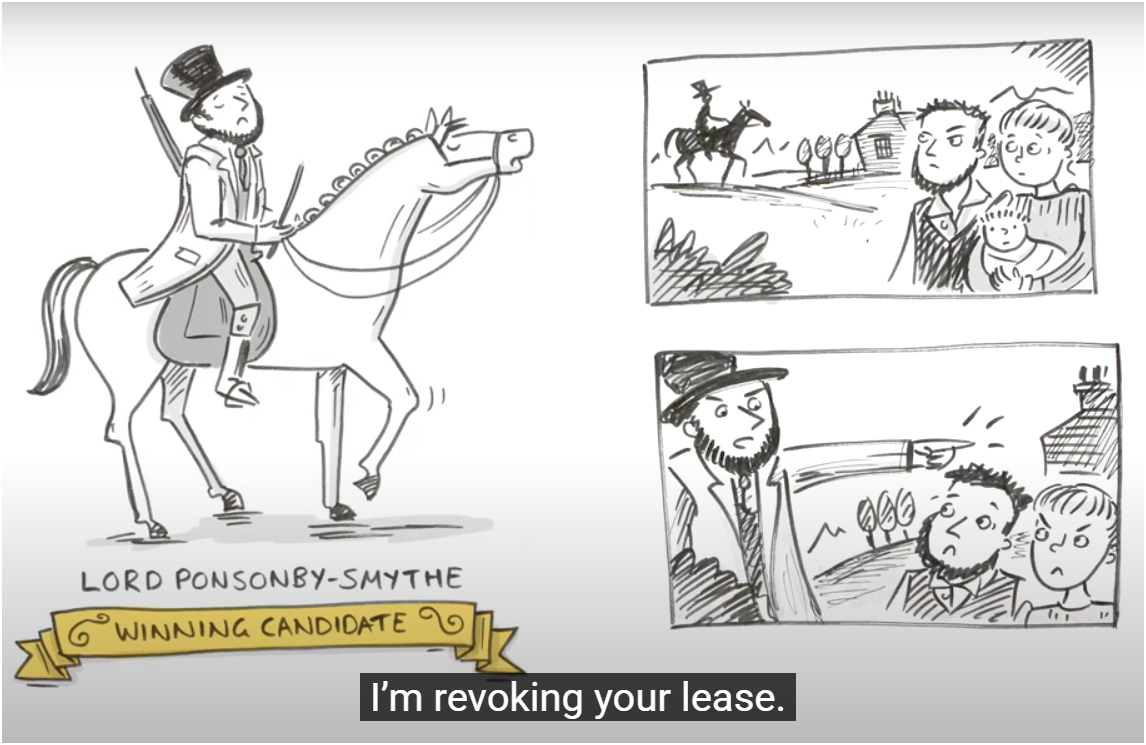
Before the Secret Ballot, voting was a public act:
votes cast aloud
party-colored ballots deposited openly
newspapers printed ballots
political operatives watched the polls
intimidation was everywhere
This system enabled:
employer coercion
landlord pressure
political retaliation
armed mobs controlling polling sites
🎥 Watch: How We Got the Secret Ballot - 6 minutes
James Madison experienced this firsthand. After losing a corrupted election, he wrote in 1785:
“The only radical cure for those arts of electioneering which poison the very fountain of liberty is the secret ballot.”
Historian John Henry Wigmore described the era bluntly:
“Landlords intimidated tenants. Employers coerced workers. Armed mobs patrolled the streets.”
Voting could be dangerous.
Democracy had become fear-based.
The Australian Ballot Revolution
Reformers turned to a breakthrough from across the world:
anonymous, government-printed ballots
marked in private
counted in public
This system swept across America and transformed elections.
But the reform had an unintended side effect:
government gained control of the counting process.
In the 21st century, secrecy crept from the voting booth into the counting room.
And that brings us to why ABE exists.
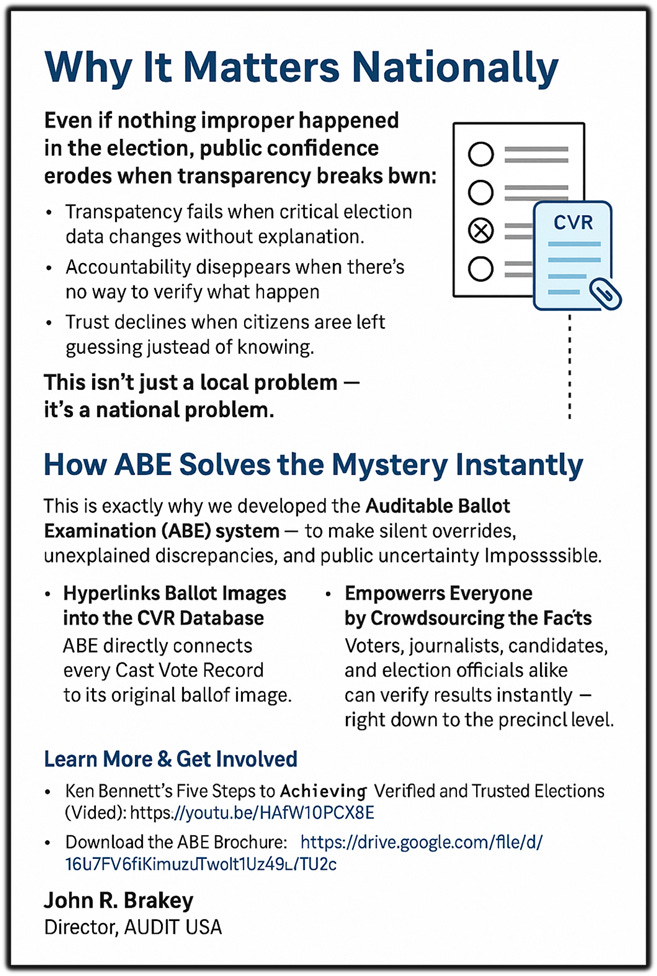
The Solution: ABE (Auditable Ballot Examination)
Video: Former Secretary of State Ken Bennett explains the path to verifiable elections.
“When one side thinks the election was fair and the other thinks it was rigged, we’re not sharing a democratic republic anymore — we’re fighting over a broken scoreboard. ABE rebuilds trust through transparency.”
— Ken Bennett
1) Integrity in Voter Registration System who can vote.
2) Prove Only Registered Voters Voted.
3) Numbers of Ballots = Numbers of Voters – Do Numbers Balance?
4) Do Ballot Images Match the Numbers Cast Vote Record (CVR)
5) Paper Ballots Verify Ballot Images (Ballot Library)
What Is ABE?
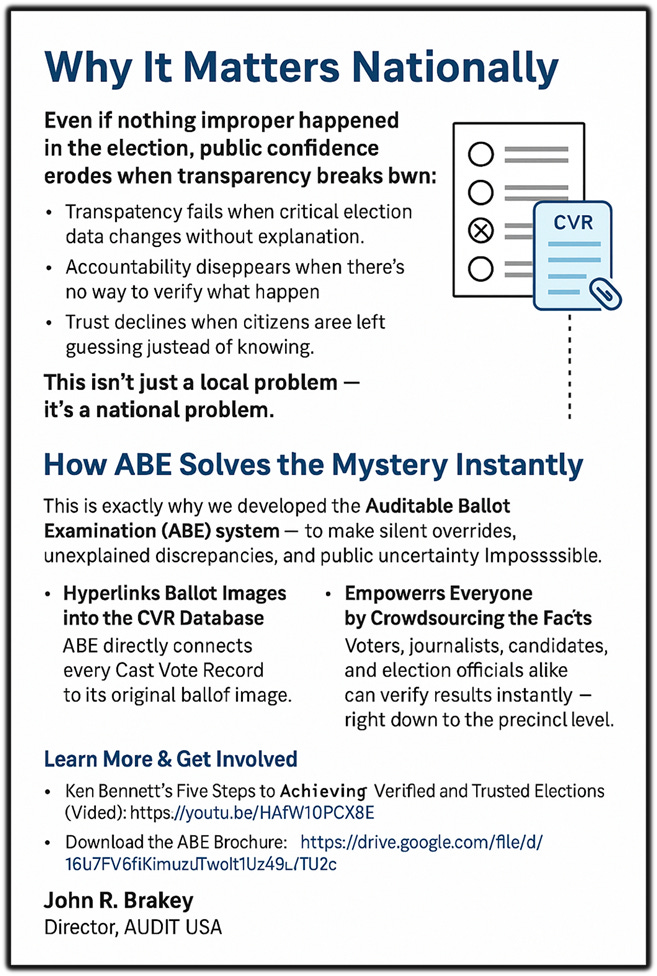
ABE is a free public tool — a powerful Excel macro that:
Processes and organizes ballot images.
links them to the CVR (Cast Vote Record database)
sets up precinct-level audits
allows the public to verify results
removes the “black box” from digital counting by making it a “transparent box”
Brochure: https://bit.ly/3Svn7n4
User Manual: https://bit.ly/3yZrKPi
Video Demo (Ellen Theisen, 19 minutes)
Final Thought
Dr. Jane Goodall said it best:
“The greatest danger to our future is apathy.”
Understanding is an act of courage.
Verification is an act of citizenship.
This is not about Trump or Biden.
It is not about left or right.
It is about whether citizens retain the ability to see, verify, and trust their own elections.
Because once democracy becomes a black box,
it doesn’t stay democratic for long.
John R. Brakey
Executive Director, AUDIT Elections USA
Co-Developer of the ABE Hybrid Verification System
Election Transparency Investigator, Educator & Reform Advocate
📞 520-339-2696
📧 JohnBrakey@gmail.com
“Trust but verify.” — Ronald Reagan
“Without verification, trust cannot be established.” — Bennett & Brakey

AUDIT USA is a 501(c)(3) organization. Your donations are tax-deductible!
Send donation check to:
AUDIT USA P.O. Box 26361
Tucson, AZ85726
Or Donate online using this
We appreciate donations of any size.
Thanks for reading John’s Substack! Subscribe for free to receive new posts and support my work.